

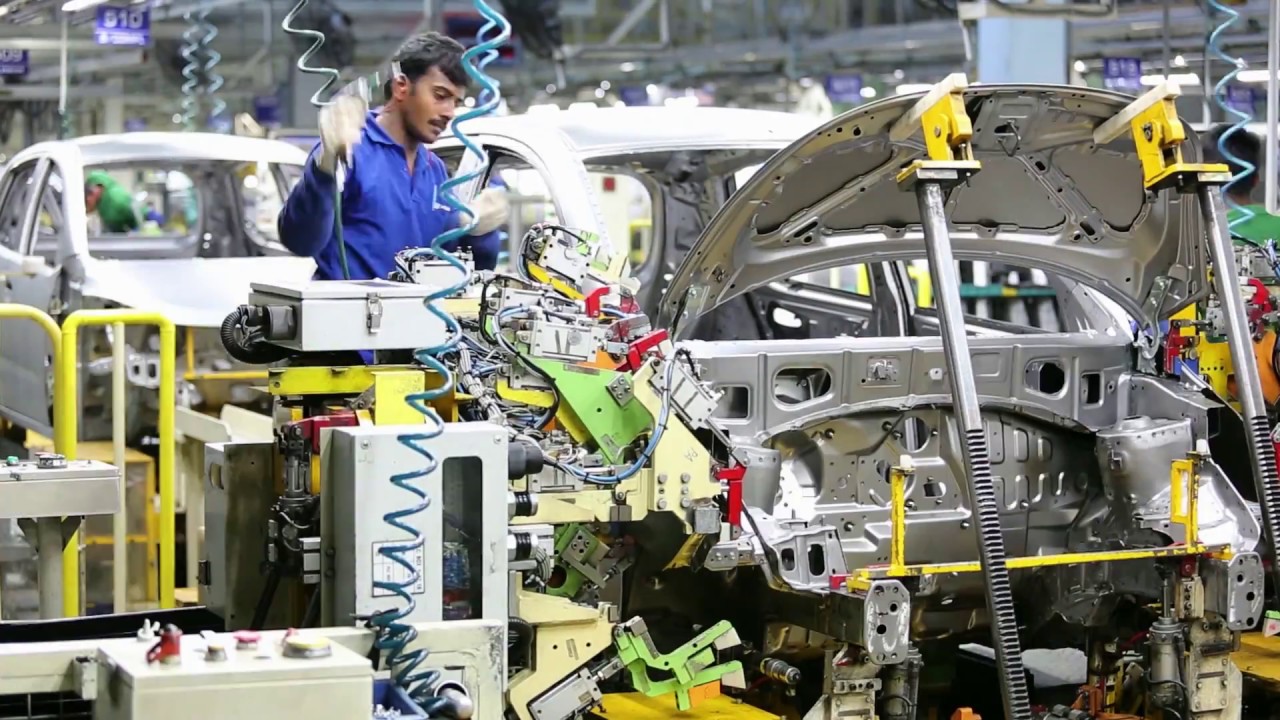
India’s automobile industry is undergoing one of the biggest transformations in its history. Traditionally known for large-scale vehicle assembly and mechanical manufacturing, the sector is now shifting toward electric vehicles (EVs), automation, robotics, smart factories, artificial intelligence (AI), and sustainable production systems. As a result, the future of automobile manufacturing jobs in India looks stronger than ever, creating new opportunities for freshers, ITI candidates, diploma holders, engineers, and experienced professionals.
India has already become one of the world’s largest automobile production hubs, and government initiatives like Make in India, rising EV adoption, export growth, and advanced manufacturing technologies are expected to drive massive employment growth over the next decade. Leading automotive companies are investing heavily in future-ready production systems, making the automobile manufacturing sector one of the most promising career paths in India for 2026 and beyond.
This guide explains future industry trends, high-demand skills, emerging job roles, salary expectations, and long-term career opportunities in India’s evolving automotive manufacturing industry.
Why the Automobile Manufacturing Industry Is Growing in India
India has emerged as a major global automotive production center. Rising domestic demand, expanding exports, and increasing investment in electric mobility are pushing the sector toward rapid growth.
Several factors are driving this expansion:
- Rapid growth in electric vehicle production
- Government support through manufacturing incentives
- Increasing foreign investment in automotive production
- Rising demand for passenger vehicles and commercial vehicles
- Export growth in automobile manufacturing
- Expansion of component manufacturing industries
- Increased adoption of robotics and automation systems
As production capacity increases, companies are continuously hiring skilled professionals.
Major Industry Trends Shaping the Future of Automobile Jobs
The future of automotive manufacturing jobs in India is being shaped by major technological and industrial changes.
Below are the biggest trends influencing hiring demand.
1. Electric Vehicle (EV) Manufacturing Expansion
Electric vehicles represent one of the biggest transformations happening in India’s automotive sector.
Major companies investing in EV manufacturing include:
- Tata Motors
- Mahindra & Mahindra
- Ola Electric
- Ather Energy
- MG Motor India
EV production is creating new demand for battery engineers, EV technicians, motor system specialists, and battery management experts.
2. Smart Factory Automation
Modern automobile factories are becoming increasingly automated.
Factories now use:
- Robotic assembly systems
- Automated welding systems
- Smart conveyor systems
- AI-based production monitoring
- Automated quality inspection systems
Because of automation, companies need professionals skilled in robotics and machine programming.
3. Industry 4.0 Manufacturing
Industry 4.0 refers to digitally connected manufacturing systems.
Automobile factories increasingly rely on:
- Internet of Things (IoT) sensors
- Real-time production monitoring
- AI-driven machine analysis
- Cloud-connected manufacturing systems
- Predictive maintenance technology
This trend is increasing demand for technically advanced workers.
4. Battery Manufacturing Jobs Growth
EV battery production has become one of India’s fastest-growing industrial sectors.
Important battery manufacturing roles include:
- Battery Production Technician
- Battery Design Engineer
- Battery Testing Specialist
- Lithium-Ion Cell Manufacturing Engineer
- Battery Quality Control Engineer
Battery manufacturing will likely create thousands of new jobs over the next decade.
5. Robotics and Automation Careers
Industrial robotics is transforming traditional factory operations.
New career opportunities include:
- Robotics Technician
- Automation Engineer
- PLC Programmer
- Machine Control Engineer
- Automated Production Specialist
Candidates with automation knowledge will receive better salary packages.
High-Demand Automobile Manufacturing Jobs in the Future
As the industry evolves, some job roles are expected to see major growth.
Future high-demand roles include:
EV Battery Engineer
Designs and manages battery systems used in electric vehicles.
Average Salary: ₹6 LPA to ₹18 LPA
Production Engineer
Manages factory production systems and manufacturing efficiency.
Average Salary: ₹5 LPA to ₹12 LPA
Robotics Engineer
Develops and manages robotic manufacturing systems.
Average Salary: ₹8 LPA to ₹20 LPA
Quality Engineer
Ensures vehicles meet strict quality and safety standards.
Average Salary: ₹5 LPA to ₹10 LPA
Automation Specialist
Supports smart manufacturing systems and automated production lines.
Average Salary: ₹6 LPA to ₹15 LPA
Battery Technician
Supports EV battery production and testing operations.
Average Salary: ₹4 LPA to ₹8 LPA
Skills Required for Future Automotive Jobs
Candidates planning long-term careers should focus on future-ready skills.
Important skills include:
- Electric Vehicle technology knowledge
- Mechanical engineering fundamentals
- Robotics and automation systems
- CNC machine operation
- Battery technology understanding
- PLC programming
- Quality control systems
- Industrial safety procedures
- Problem-solving ability
- CAD software knowledge
- Manufacturing process management
Candidates who continuously upgrade skills will have better job opportunities.
Companies Expected to Hire Aggressively in 2026 and Beyond
Several companies are expected to expand hiring significantly.
Major employers include:
- Tata Motors
- Maruti Suzuki India Limited
- Mahindra & Mahindra
- Hyundai Motor India
- Toyota Kirloskar Motor
- Kia India
- Ola Electric
- Ather Energy
- Ashok Leyland
- Hero MotoCorp
Both traditional automotive manufacturing and EV production will continue generating large-scale employment opportunities.
Salary Growth in Future Automotive Careers
Salary growth is expected to improve as advanced technical skills become more valuable.
Estimated salary progression:
- Factory Operator: ₹2.5 LPA to ₹4 LPA
- Machine Operator: ₹3 LPA to ₹5 LPA
- Technician: ₹3.5 LPA to ₹6 LPA
- Production Engineer: ₹5 LPA to ₹12 LPA
- EV Engineer: ₹6 LPA to ₹18 LPA
- Robotics Engineer: ₹8 LPA to ₹20 LPA
- Plant Operations Manager: ₹15 LPA to ₹30 LPA
Specialized technical skills usually result in higher salaries.
Best Courses to Prepare for Future Automobile Jobs
Candidates should focus on technical certifications that improve employability.
Recommended courses include:
- EV Technology Certification
- CNC Machine Operation Training
- PLC Automation Course
- AutoCAD and CATIA Certification
- Battery Technology Training
- Robotics Engineering Courses
- Six Sigma Certification
- Quality Control Certification
- Industrial Safety Training
Practical training significantly improves hiring opportunities.
Career Advice for Freshers Entering Automotive Manufacturing
Students planning automotive careers should follow this strategy.
Step 1: Build strong mechanical and technical fundamentals.
Step 2: Learn future technologies like EV systems and automation.
Step 3: Gain practical experience through internships and apprenticeships.
Step 4: Build certifications in robotics, CNC, or battery systems.
Step 5: Apply through company career portals and technical recruitment programs.
Continuous learning will be the biggest advantage in future manufacturing careers.
Final Thoughts
The future of automobile manufacturing jobs in India looks extremely promising as the industry rapidly shifts toward electric mobility, automation, robotics, smart factories, and advanced manufacturing systems.
Companies such as Tata Motors, Mahindra & Mahindra, Maruti Suzuki India Limited, and Ola Electric will continue creating thousands of new employment opportunities over the coming years.
For freshers, diploma holders, ITI candidates, and engineers, building future-ready technical skills today can lead to strong salary growth, career stability, and excellent long-term opportunities in India’s rapidly evolving automotive manufacturing sector.
